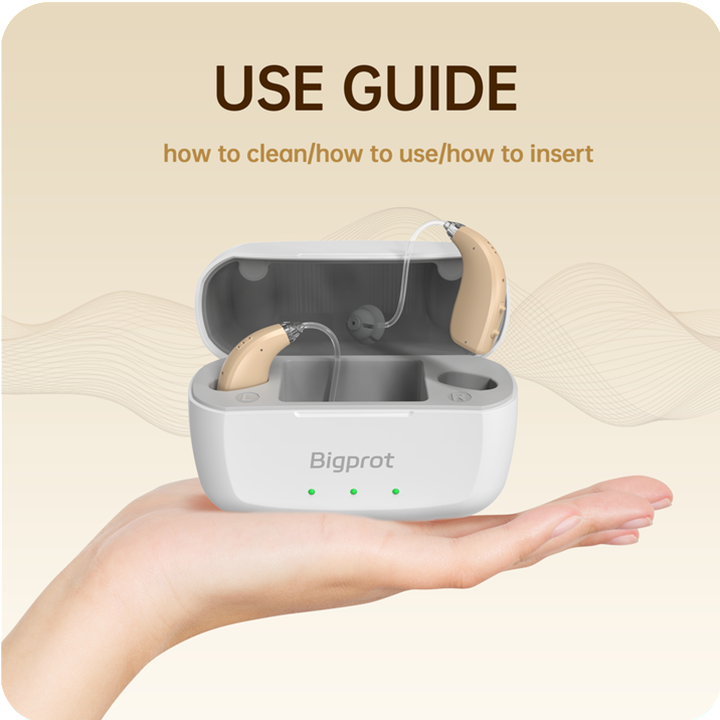
Hearing Aid 101: A Complete Beginner’s Guide

Selecting a hearing aid may be an intimidating process when doing it for the first time. Many hearing aids are available on the market depending on style, features, price and technology; therefore, one may find oneself lost about where to begin and which hearing aid to select. This beginner's guide will cover how a hearing aid works, the types available, how to select the right hearing aid style, and factors to consider before selecting a hearing aid.

Table of contents

    1. Do I Need an OTC Hearing Aid?

    Hearing problems are common among people who have doubts about the need for hearing aids. This is because hearing impairment occurs gradually, and people do not even know they are suffering from hearing impairment when going about their day-to-day conversations.

    There are many people who are having problems understanding some parts of speech, have to increase the volume of their televisions, and are having problems hearing in noisy environments.

    Determining Whether You Might Need a Hearing Aid

    One of the ways you can determine whether you need a hearing aid is by asking yourself the following question:


    Is my hearing impacting my everyday activities?


    You should consider using hearing aids if you:

    • Regularly request others to repeat what they say
    • Struggle to follow conversations, especially in places like restaurants
    • Are forced to turn up the volume on your TV or telephone
    • Are under the impression that others aren’t speaking clearly enough
    • Miss important noises, including doorbells and ringing telephones
    • Shy away from interactions due to your inability to hear properly

    When is It Appropriate to Try an OTC Hearing Device?

    OTC hearing devices are supposed to be used by people with mild to moderate hearing problems. The best suited persons are those who have begun having problems with their hearing abilities and want to find an easy and effective solution.

    You can try an over-the-counter hearing device if:

    • The hearing difficulty has developed gradually
    • You are able to hear but not comprehend what is being said
    • You only require assistance with conversations, watching TV or listening to other things you do regularly

    But not everyone with hearing impairment can use the over-the-counter hearing aid device. This is because there are some cases where consulting an audiologist becomes necessary. These include sudden hearing impairment, hearing impairment that is more pronounced in one ear, earache, fluid in the ear, ear infection, great difficulty comprehending speech, dizziness, and balance problems.

    2. How Do Hearing Aids Work?

    A hearing aid is an electronic device used to assist patients in hearing sounds. However, it does not amplify all sounds but works by amplifying sounds and making them easier to hear. It works by collecting sound from the environment, processing it, and then amplifying it to make it easier to hear.

    The function of most hearing aids can be described by four processes:

    1. Sounds are captured: The device contains a microphone, which captures the sounds from the environment.
    2. The sound is analysed and amplified: The hearing aid's processor analyses different sounds and amplifies them as per the needs of the patient. For example, it can make speech easier to hear as it reduces noise.
    3. The required sound signals are amplified: The hearing aid amplifies the necessary sound to make sure that important sounds are audible.
    4. The processed sound is delivered into your ear: The processed sound is sent through the speaker (receiver) into your ear, allowing you to hear conversations and everyday sounds more clearly.
    Hearing aid


    Modern-day hearing aids can even have other features such as noise reduction technology, feedback reduction, multi-program capabilities, and rechargeable batteries. In simple words, hearing aids are clever sound helpers. They do not bring back your ability to hear to its earlier state, but help your brain hear better in order for you to relate to the people around you.

    3. Learn the Different Types of Hearing Aids

    Selecting an appropriate hearing aid may be intimidating for a first-time user, and there are several types that are available. It is vital to be familiar with the variations among the devices in terms of their appearance, comfort, efficiency, and functionality. The purpose of all hearing aids is the same—to improve your ability to communicate and hear. It is all about how they are worn, their looks, and the type of hearing aid that would be appropriate for certain situations.

    Hearing aid

    ① Behind-the-Ear (BTE) Hearing Aids

    Behind-the-Ear (BTE) is the most popular type of hearing aid. The hearing aid sits behind the ear, and sound passes into the ear canal from it using either wires or tubes. BTE hearing aids can be used in case of any degree of hearing loss from mild to profound.

    Advantages

    • Provides strong amplification for different levels of hearing loss
    • Easy to handle and adjust
    • Longer battery life due to larger components
    • Often available with Bluetooth and rechargeable options
    • Durable and reliable for daily use

    Things to Consider

    • More visible than smaller hearing aid styles
    • May take some time for new users to adjust

    Best For: Users who need powerful hearing support and prefer easy operation.

    ② Receiver-in-Canal (RIC) Hearing Aids

    RIC hearing aids are very much like BTE hearing aids in the way that the speaker is located within the ear canal and connected to the aid via a wire. One of the most commonly used types by adults, they have proven their worth regarding performance, comfort, and aesthetics.

    Advantages

    • Slim and discreet design
    • Natural and clear sound quality
    • Lightweight and comfortable for all-day wear
    • Supports modern features such as Bluetooth and rechargeable batteries

    Things to Consider

    • The receiver may need regular cleaning due to earwax and moisture exposure
    • Small parts require careful handling

    Best For: Users looking for a comfortable hearing aid with excellent overall performance.

    ③ In-The-Ear (ITE) Hearing Aids

    In-The-Ear (ITE) hearing aids are custom-fitted and worn inside the ear. The size of these hearing aids allows for easier handling than the smaller canal aids.

    Advantages

    • Easy to insert, remove, and adjust
    • Comfortable custom fit
    • Larger controls are easier to operate
    • Good balance of performance and convenience

    Things to Consider

    • More visible than smaller in-canal styles
    • Requires regular cleaning to prevent earwax buildup

    Best For: Users who want a comfortable and easy-to-use hearing aid.

    ④ In-the-Canal (ITC) Hearing Aids

    In-the-Canal (ITC) hearing aids are positioned partially in the ear canal and are therefore smaller than ITE devices. ITC hearing aids are recommended for mild to moderate hearing impairment.

    Advantages

    • Smaller and more discreet design
    • Comfortable and lightweight
    • Natural appearance when worn
    • Easier to handle than smaller canal styles

    Things to Consider

    • Smaller batteries may need more frequent replacement
    • Small controls may be difficult for some users

    Best For: Users who want a balance between discreet appearance and easy operation.

    ⑤ Completely-In-Canal Hearing Aids

    The Completely-In-Canal hearing aid is custom fitted to go deep into the ear canal. It is meant to be very discreet and is not easy to detect when it is being worn.

    Advantages

    • Nearly invisible when worn
    • Natural appearance
    • Less affected by wind noise
    • Custom fit for better comfort

    Things to Consider

    • Small size makes them harder to insert and remove
    • Limited space for advanced features
    • Requires regular cleaning and maintenance

    Best For: Users who value a discreet appearance and want a less noticeable hearing aid.

    ⑥ Invisible-in-Canal (IIC) Hearing Aids

    Invisible-in-Canal (IIC) hearing aids are the smallest type of custom hearing aid. They are inserted deep into the ear canal and are meant to be invisible. They can be used in cases of mild or moderate hearing loss.

    Advantages

    • Almost invisible when worn
    • Maximum discretion and natural appearance
    • Comfortable custom fit
    • Less affected by glasses, masks, or hair

    Things to Consider

    • Very small size makes handling more difficult
    • Limited space for advanced features
    • Smaller batteries require more frequent replacement

    Best For: Users who want the smallest and most discreet hearing aid possible.

    Quick Comparison of Hearing Aid Types

    Hearing aid

    4. How to Choose the Right Hearing Aid for You?

    Selecting a hearing aid is not only about choosing the most compact or sophisticated piece of technology. The right hearing aid is that which meets your personal requirements regarding your hearing loss, comfort, lifestyle, and budget. Consider the following important points.

    1. Start With Your Hearing Loss Level

    The first step is understanding your hearing needs. Different hearing aid styles are designed for different levels of hearing loss.


    Hearing Loss Level Recommended Types
    Mild Hearing Loss RIC, ITC, CIC, IIC
    Moderate Hearing Loss RIC, ITE, ITC, CIC
    Severe Hearing Loss BTE, RIC (power models), ITE
    Profound Hearing Loss BTE

    The importance of professional hearing testing is that the same hearing device can function differently, based on the individual’s hearing condition.

    2. Consider Your Lifestyle

    It is essential to consider your lifestyle as well, since it will affect your choice of a suitable hearing aid. The hearing aid that is efficient in a calm household environment might prove to be inefficient in loud restaurant environments, in business meetings, or outdoors.


    Your Lifestyle What You May Need Recommended Features Recommended Hearing Aid
    Often Attend Meetings or Social Events Clear conversations in different environments • Excellent speech clarity
    • Advanced noise reduction
    • Directional microphones
    • Bluetooth connectivity
    RIC or Advanced BTE
    Prefer a Quiet and Simple Lifestyle Easy daily use and reliable performance • Easy operation
    • Comfortable all-day wearing
    • Longer battery life
    • Simple maintenance
    BTE or ITE
    Appearance Is Your Top Priority A discreet hearing solution that attracts less attention • Smaller size
    • Less visible design
    • Comfortable custom fit
    • Natural appearance
    ITC, CIC, or IIC

    3. Check Important Features Before Buying

    Speech Enhancement

    One of the most important features because the main goal of hearing aids is understanding conversations.

    Look for:

    • Clear speech processing
    • Noise reduction
    • Directional microphones

    Feedback Reduction (Anti-Whistling)

    Feedback occurs when amplified sound leaks back into the microphone, causing a whistling sound. Modern hearing aids use feedback cancellation technology to reduce this problem. A good hearing aid should provide:

    • ✓ Stable sound
    • ✓ Less whistling
    • ✓ Comfortable listening experience

    Rechargeable Battery

    The increasing popularity of rechargeable hearing aids is a result of their ease of use. As opposed to conventional battery-operated hearing aids, rechargeable hearing aids do not require constant replacement of small batteries. This makes them convenient for daily use. Rechargeable hearing aids are particularly suitable for senior citizens due to their easy maintenance.

    Bluetooth Connectivity

    Useful for users who want to:

    • Connect with smartphones
    • Stream phone calls
    • Listen to music or videos

    4. Comfort and Fit

    However, there is also the misconception that the smallest device should always be the best one for a person. However, size does not matter, since comfort, fit, and practicality of use of the hearing aid may be even more important.

    However, when you come to the point that you should acquire a hearing aid for yourself, several factors need to be considered, including how comfortable the hearing aid is to wear throughout the day, how easy it is to put on and take off, and whether it stays in place during your activities. Moreover, you need to keep in mind if the hearing aid will make you feel plugged up.

    5. Consider Reliability and Durability

    A hearing aid is a long-term investment. Before buying, check:

    Build Quality

    Look for:

    • Moisture resistance
    • Reliable components
    • Good protection against dust and sweat

    Battery Performance

    Consider:

    • Battery life
    • Charging speed
    • Replacement cost

    Maintenance Requirements

    Smaller hearing aids usually require:

    • More frequent cleaning
    • More careful handling
    • Regular professional checks

    6. Warranty and Trial Period Are Essential

    Since requirements vary from person to person, choosing a hearing aid may take some time, as can adjusting to the device. A trial period enables you to see whether the hearing aid suits you in practice.

    Trial Period

    Before buying a hearing aid, you should know the details of the trial period offered by the seller, namely the period during which you may try out the device and either return it or exchange it if needed. It is vital to pay attention to such things as the comfort level, sound quality, clarity of speech, etc., while trying out the hearing aid.

    Warranty

    An effective warranty provides extra safety and can reduce the cost of owning the product. Before purchasing a hearing aid, one should know the period of the warranty, terms of the warranty, possibility of repairs, as well as whether the device comes with additional accessories and batteries.

    7. Choosing the Right Brand

    When choosing between hearing aids, cost cannot be your only criterion. A good brand will offer advanced technology and products, professional fitting, and post-sales assistance.

    Technology and Performance:

    Consider brands with advanced sound-processing ability, reliable noise-reduction techniques, stable connectivity, and the ability to adjust to the user's environment.

    Professional Assistance and Fitting:

    Proper fitting is vital to ensure maximum benefit from the hearing aid. Think about the availability of professional tests, adjustment of the hearing aid, technical support, and post-sales assistance offered by the brand.

    User Experience and Reviews:

    Reviews from users may give a good idea about how well a particular hearing aid works in practice. It will be useful to find out what users say about comfort, sound, battery life, and customer support.

    Choosing a proper hearing aid brand is not simply about choosing advanced features; it is also about a brand offering reliable products and services.

    Quick Decision Guide

    An expensive or small hearing aid does not always represent the best one. It is the one that is compatible with your own needs and preferences in terms of comfort, style, lifestyle, and cost. A good fit for you can not only enhance your hearing but also your life.


    Your Priority Recommended Choice
    Strongest Hearing Support BTE
    Best Overall Balance RIC
    Easy Operation BTE / ITE
    Small and Discreet ITC / CIC
    Almost Invisible IIC
    Best Value for Most Users Mid-range RIC
    Maximum Features Premium RIC / BTE
    Easier Maintenance Larger Models

    5. How to Insert ​Hearing Aids?

    The right usage of the hearing aid will be very critical in getting clear sound and comfort. The hearing aid should sit right in the ear without any form of discomfort, pressure, or excess whistling noise. If this is your first time using the hearing aid, it is only normal to give yourself some time to get used to it. The brain will take time to get accustomed to the sound you have not been hearing for quite some time now.

    Insert the Hearing Aid Correctly

    Before putting on your hearing aid, ensure that the aid is clean and that the battery is fully charged or operational. Insert the hearing aid correctly into its right place based on the type of hearing aid.

    A well-inserted hearing aid will:

    • Be firmly placed but not cause pain
    • Produce quality sound without any persistent whistling sounds
    • Remain in its place while performing everyday tasks

    If you feel the hearing aid is not fitting well, you may need some help from a hearing aid specialist.


    Hearing aid

    Begin Slowly and Let Yourself Adapt

    Users who are new to using hearing aids must not wear the devices for an entire day at the start. They can try to wear the devices for a few hours daily in a silent setting and then increase the duration gradually as they get used to it.

    Some of the things that people experience during the initial phase include:

    • Different sound of their voice
    • Louder sounds of the surroundings
    • More noticeable background noises

    Practice in Different Listening Environments


    Hearing aid

    Having familiarized yourself with the use of the device in a calm setting, put it on in various conditions, for example, talking at home, outdoors, in a restaurant, and in group discussions. In this way, you will learn about how the hearing aid functions in varied settings and make additional adjustments with the help of your hearing expert.

    Be Patient During the Adjustment Period

    The use of hearing aids does not work the same way that putting on a pair of glasses would, where the difference is instantly felt. It will take some time before your brain adjusts to the new sound amplification and before you get used to using the device properly.

    6. How to Clean Hearing Aids?

    Due to the fact that hearing aids are put near the ears all day long, this implies that they will constantly be subjected to substances like earwax, water, sweat, dust, and body oils. This can cause some accumulation in the receiver, microphone, and other small parts of the hearing aid instrument and hence cause some complications like poor sound quality, low volume, distortion, power issues, and whistling.

    Step 1: Clean Your Hearing Aids Each Day

    Once you have taken out your hearing aids, you should use a dry cloth and wipe the hearing aids. You must give extra care to those places that touch your ear because those places tend to accumulate wax and moisture.

    You must not use any kind of liquid to clean your hearing aids. Liquid is harmful to the inner workings of the hearing aids.

    Step 2: Removing Wax from the Hearing Aid

    Wax build-up is one of the main reasons why hearing aids may stop working well or completely fail to work. One should remove wax from the receiver, microphone, and ear tips of the hearing aid using a brush or special tools for removing wax from hearing aids. It is important not to use sharp objects such as needles and pins to do that.

    Step 3: Testing the Microphone and Sound Outlets

    The microphone and sound outlets are vital in allowing the hearing aid to receive and transmit sound. Clogging by dust and wax may affect the sound. Be sure to examine these components and clean them each time you find something inside them.

    Step 4: Prevent Your Hearing Aids from Getting Wet

    One of the most dangerous factors that affect the working of hearing aids is moisture. Take out your hearing aids when taking a shower or a swim. Also, take out your hearing aids before going to sleep to prevent any kind of moisture in your ears.

    Step 5: Charging Contacts Maintenance

    If your hearing aids are rechargeable, you must keep the charging contacts clean and dry. If you are using batteries, change them when necessary and ensure that you remove used batteries when not in use.


    Hearing aid

    Recommended Cleaning Routine

    For daily care:

    • Dry your hearing aids after wearing them
    • Remove excess earwax and moisture
    • Keep your hearing aids in a safe, dry environment

    For maintenance:

    • Inspect your hearing aids' wax filters and ear tips when necessary
    • Change them based on instructions provided by the manufacturer
    • Get your hearing aids professionally cleaned if you notice changes in their sound quality

    Proper hearing aids maintenance can save you from common problems associated with this device.

    7. Common Hearing Aid Problems and Solutions

    Despite appropriate usage and maintenance of the hearing aids, one may face minor issues in day-to-day usage. It is to be noted that most of these issues are not due to a fault in the hearing aid itself but arise out of various normal circumstances. Some of these normal conditions causing the problem are explained below.

    ① Why Is There No Sound in My Hearing Aid?

    Please do not assume that there is something wrong with your hearing device if it stops functioning abruptly. Usually, it is due to simple issues such as low battery life or clogged sound output.

    Try to check whether:

    • Your hearing aid is switched on;
    • Your rechargeable battery has sufficient energy;
    • Your microphone or speaker port is clogged with earwax or dust;
    • Your wax filter is clogged;

    What you can do: Clean the hearing aid, change the battery or charge it, and restart the device.

    ② The Sound Is Too Low or Unintelligible

    Occasionally, users realize that the hearing aid functions normally, but the voices are quiet, unintelligible, or just seem different than usual.

    Reasons for such problems include:

    • Earwax obstruction at the sound port
    • Wrong placement of the hearing aid in the ear canal
    • Moisture influencing its functioning
    • Adjustment issues

    What can you do: Clean the hearing aid, make sure that the placement of the aid is correct. Consult with a hearing specialist if needed.

    ③ My Hearing Aid Keeps Whistling

    One of the main issues that are commonly raised by users is the issue of whistling. This mainly occurs due to the feedback of the sound through the speaker system.

    Common situations include:

    • The hearing aid is not inserted properly
    • The ear tip does not fit well
    • Earwax is blocking the ear canal
    • The device needs adjustment

    What you can do: Take out the hearing aid and put it back in place again to see if the problem goes away.

    ④ Everything Is Too Loud or Sounds Strange

    Such a problem typically emerges for first-time users of hearing devices. One might be able to listen to the noise made by one’s feet while walking, sounds made from plates and glasses being hit together, or conversations going on in the background. This does not automatically imply that the hearing device is too strong.

    What you can do: Wear the hearing aid only for a few hours initially and increase that time gradually.

    ⑤ My Hearing Aid Feels Uncomfortable

    A new hearing aid may feel unusual at first, but it should not cause pain.

    Possible reasons include:

    • The hearing aid is not positioned correctly
    • The ear tip size is not suitable
    • The device shape needs adjustment

    What you can do: Make sure that your hearing aid is properly placed and allow your ears to get used to it. If you still feel discomfort, it is better to consult with a hearing professional.

    ⑥ The Battery Does Not Last Long

    Short battery life is a frequent problem, particularly in the case of rechargeable hearing aids and models with Bluetooth functions.

    Possible causes include:

    • Frequent streaming or Bluetooth use
    • Dirty charging contacts
    • Old batteries
    • The device not being fully charged

    What you can try: Keep charging contacts clean, charge the device fully, and check whether certain features are using extra power.

    ⑦ My Hearing Aid Gets Wet

    Hearing aids are built to be worn on a daily basis, but it is important to remember that they are electronic devices and, as such, can be easily damaged by moisture.

    Do not:

    • Wear hearing aids when taking a shower
    • Keep them in humid environments
    • Leave hearing aids in the bathroom

    If they get wet: Use a dry cloth to wipe them and put them in a drying case. Do not use a hair dryer to try to dry them.

    When Should You Contact a Hearing Professional?

    You can solve many common issues through cleaning, charging, and checking the fit. However, professional help is recommended if:

    • The hearing aid suddenly stops working
    • Sound quality does not improve after cleaning
    • The device causes pain
    • Feedback continues frequently
    • You feel the hearing aid no longer matches your hearing needs

    Having proper knowledge about how your hearing aid functions and how to solve any issues that you may face can improve your performance and give you a more comfortable hearing experience.

    8. Why Seniors Should Get Hearing Aids Early

    Hearing loss is quite a common issue among older people, yet it should be treated as much more than just an issue with hearing ability. For most senior patients, hearing impairment could lead to many serious problems that include difficulties with communication, social activity, emotional state, and life quality. Recently, an increased number of studies have shown the link between hearing problems and cognitive function. Although hearing aids cannot stop the development of dementia, hearing treatment may help prevent dementia from developing at all.

    How Does Hearing Loss Affect Brain Functioning?

    Whereas hearing loss does not simply impair one’s ability to hear, the brain is forced to strain itself more often due to poor auditory signals being received. Thus, untreated hearing loss may affect the communication and social skills of a person in such a way as to affect the brain. There are several potential mechanisms by which hearing loss may be related to cognitive decline.

    (1) Higher Levels of Cognitive Strain

    In cases where hearing is problematic, the brain requires additional cognitive efforts to recognize sounds and comprehend the language used. Therefore, less cognitive capacity may be dedicated to other cognitive activities such as remembering and focusing.

    In addition, the 2023 ACHIEVE study published in The Lancet contains compelling data on the possible effects of hearing improvement intervention. 977 people between the ages of 70 and 84 with untreated hearing loss were observed in the research for three years. While no significant differences could be found among the groups regarding the rate of cognitive decline, at-risk older participants receiving hearing intervention declined by 48% slower than non-intervention recipients.

    This means that hearing improvement might particularly help at-risk individuals.

    (2) Decreased Social Interaction

    People who have hearing difficulties are in situations where talking and communicating become more difficult. Older people may not wish to get into discussions or attend family meetings or social events since they cannot take part owing to their hearing difficulties.

    However, lack of socialization and isolation may eventually cause harm to the psychological and cognitive health of individuals. As per a recent study published in JAMA Neurology, involving 31 studies comprising more than 137,000 subjects, people wearing hearing aids have a reduced chance of experiencing dementia or cognitive decline than those not wearing hearing aids.

    Experts believe that good hearing may facilitate seniors' social life.

    (3) Deprived of Auditory Input

    The brain relies on constant sensory stimulation to function. In the case of hearing loss that has not been addressed for an extended period of time, the brain would receive less frequent sound stimuli, which could potentially decrease activity of brain regions involved in the processing of hearing and language.

    This phenomenon is known as auditory deprivation, whereby the brain becomes increasingly inefficient in processing the sounds it does not receive anymore. Early detection of hearing problems could ensure adequate auditory input and allow the brain to process sounds.

    Why Is Early Hearing Intervention Important?

    Many elderly individuals tend to consider hearing aids when their hearing has already gone downhill. However, the more that you delay this, the more difficult it becomes for you. This is because if you have not heard some noises for quite some time now, your brain will need more time to get used to them. Early use of hearing aids will benefit the senior citizen in that:

    • Enhances Communication Ability: If seniors can understand what is being discussed, they will definitely stay in touch with their loved ones and friends.
    • Easier Adjustment: Easy adjustment to hearing aids helps the brain adjust to amplified sounds more easily.
    • Preserves the Quality of Life: Better hearing leads to better confidence levels, independence, and being more involved in their daily lives.

    For senior patients with hearing impairment, a hearing test and use of hearing aids at the right time will not only enhance hearing but also communication, social interaction, and confidence as well. Early detection and use of hearing aids are vital for healthy aging.

    9. FAQ

    Yes, they can work quite well for adult individuals who have mild to moderate hearing loss. It has been designed in order to allow you to hear sounds in your day-to-day routine such as talking and watching television. It is important for you to choose an appropriate hearing aid.

    Not really, but hearing aids will definitely make sure that you are able to hear more clearly and also converse more easily. Hearing aids of today’s era help in amplifying important sounds while filtering out any kind of noise.

    We know that everyone’s needs when it comes to hearing are individual. That is why we provide a 45-day risk-free trial. Should the hearing aids fail to satisfy you, feel free to ask for a refund during this time period. You will be able to use them in everyday situations without any risks.
    Yes, many people use hearing aids during their whole day. At first, it may be wise to allow some time for your ears to adjust. Increasing the time spent wearing them gradually can help you get used to it. In the end, they could become part of your daily routine.
    The longevity of hearing aids will depend on the quality of the device, the manner of its usage and maintenance. When used properly, hearing aids can serve you for several years.
    Yes, Vuiwx hearing aids assist in improving hearing in background noise situations.This is because of attributes like noise cancellation and audio processing which will take care of the unwanted sounds that may prevent you from hearing other people at restaurants, during family reunions, or outdoors.
    Yes. Hearing aids can be worn while watching television. These devices will make the voice clear thus reducing the amount of volume needed when watching.
    Our hearing aids are usually not covered by Medicare or any traditional form of insurance. but, because they are FDA-approved OTC hearing aids, our hearing aids are made for people who have mild to moderate hearing loss and can be bought without a prescription. You will also be able to buy our hearing aids using your HSA/FSA. As your eligibility may differ based on your particular HSA/FSA policy, it is advised that you check with your HSA/FSA carrier to verify your eligibility.
    Hearing aids are usually built to assist people who have mild to moderate hearing loss. It will make it easier for you to hear people talk or the noise surrounding you. If you suffer from severe hearing loss, it is advisable that you seek a professional’s advice on how to solve this problem.
    Absolutely, this is quite natural. Right from the moment I wear my hearing aids, it is quite natural that my brain will need some time to adjust to the new way of hearing. What is going to be the first thing is that everything will sound louder and clearer than before. It will take time for all the ordinary sounds around to become familiar once again. But it will eventually happen.